


Can Invisalign® Ruin Your Teeth? Safety Facts From Specialist Orthodontists
Mar 24, 2026
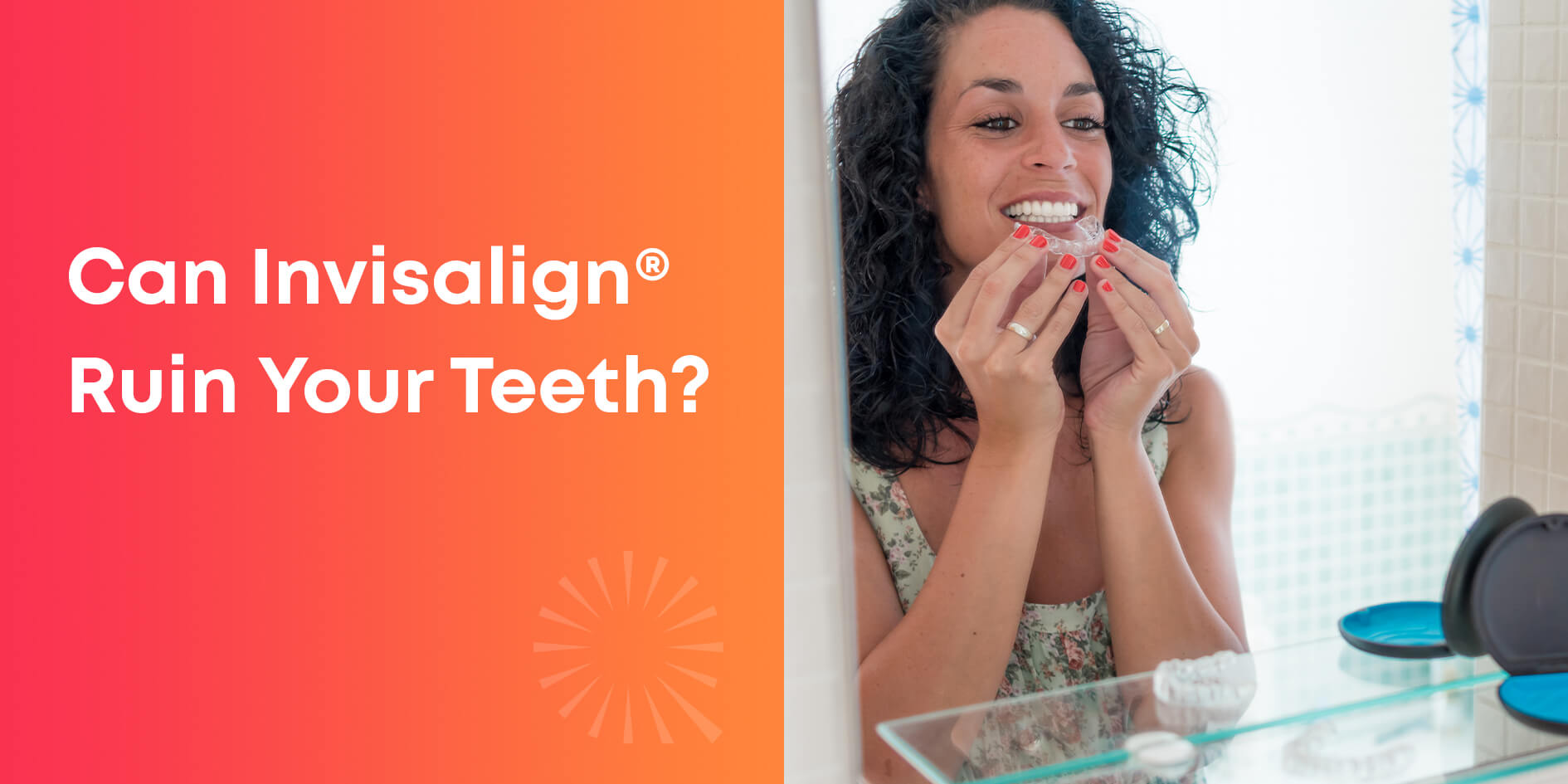
Clear aligners are often described as a modern, comfortable way to straighten teeth.
But if you have seen alarming posts online, it is reasonable to ask the hard question: can Invisalign® ruin your teeth?
Short answer: when Invisalign® is planned and supervised by Specialist Orthodontists, and you keep up with hygiene and review schedules, treatment is considered safe. Problems usually stem from poor fit, unsupervised treatment, or lapses in oral hygiene, not from the aligners themselves.
In this article, our Specialist Orthodontists explain real risks, how we prevent them with digital planning and ongoing monitoring, and the practical steps you can take to keep your teeth and gums healthy from start to finish.
What could go wrong, and how we prevent it
Every orthodontic treatment has potential risks. Below are the common concerns we discuss during consent, plus the safeguards we use in practice.
Decalcification and cavities: White marks or decay can form when plaque is left on enamel. Aligners cover teeth, so if they are worn over food debris or sugary drinks, the risk rises. Prevention focuses on meticulous brushing, daily flossing and limiting snacking between meals. We reinforce this at every review and, where needed, recommend hygienist support.
Gum inflammation: Gingivitis can develop if plaque accumulates along the gumline. Aligners themselves do not cause gum disease, but they can trap plaque if hygiene slips. We coach technique, suggest interdental brushes and adjust your schedule if early signs appear.
Attachment wear or staining: Small tooth-coloured attachments help aligners grip and move teeth. They can discolour with coffee, tea or curry, just as natural enamel can. Staining is cosmetic and can be polished or the attachments replaced as needed. Chipping is uncommon and usually linked to biting habits or hard foods. We review attachments at each check.
Aligner fit and unwanted tooth movement: Poorly fitting aligners or skipping ahead can stress teeth and gums. At Queensway Orthodontics, your Specialist Orthodontist plans movements in 3D, sequences each aligner, and uses Dental Monitoring to verify fit. If tracking drifts, we intervene early, for example by extending a wear stage, adding elastics where indicated or prescribing refinements.
Root resorption: Mild shortening of tooth roots can occur with any orthodontic movement. It is usually minor and of little clinical consequence. We assess risk factors at the start, use gentle, staged movements, and take radiographs when clinically appropriate.
Temporomandibular joint discomfort: Some patients notice transient jaw aches during early stages or complex bite corrections. We adjust pace, prescribe exercises and modify elastics if required.
Key point: these risks are typically avoidable or manageable with professional oversight, good communication and consistent home care.
How Specialist Orthodontists keep your treatment safe
Individualised 3D planning: We scan with iTero and use detailed records to plan movements that respect biology and balance tooth, bone and soft tissue health.
Structured wear schedules: Your clinician sets a wear timetable matched to your biology and tooth movement, not a generic number of days. We may vary wear time during treatment to protect tracking.
Dental Monitoring and remote check-ins: Using the smartphone app, we review photos between visits to spot early issues, such as edge lifting, plaque build-up at the gumline or attachment wear. Many small problems are resolved with timely advice, which reduces the need for in-clinic adjustments.
In-person reviews: Periodic clinical checks remain vital. We polish attachments, check contacts and bite, and update your hygiene plan where needed.
If you want to see what treatment can achieve under specialist care, explore our Invisalign® before and afters gallery to review real cases from our clinics.
Daily care that protects teeth and gums
You can do a lot to keep your mouth healthy during Invisalign® treatment.
- Brush twice daily with fluoride toothpaste, and clean between teeth with floss or interdental brushes once a day. Consider an electric toothbrush if manual brushing is inconsistent.
- Remove aligners for all food and any drink other than cool water. Hot drinks can warp plastic. Sugary or acidic drinks under aligners raise decay risk.
- Rinse or brush after meals before reinserting aligners. If you cannot brush, rinse thoroughly with water and brush as soon as possible.
- Clean aligners gently with a soft brush and cool water. Avoid toothpaste on the plastic, which can scratch and harbour plaque. Use recommended cleaning crystals or tablets as advised.
- Keep aligners in their case when not in use. Pets love to chew them, and pockets are where many aligners are lost.
- Follow your wear schedule precisely. Skipping ahead or leaving aligners out for hours can knock tracking off course and prolong treatment.
When to contact the clinic
Reach out through Dental Monitoring or call your local practice if you notice any of the following:
- Persistent gum bleeding or soreness that does not improve within a week despite careful cleaning
- Aligners not seating fully despite chewies and guidance
- A cracked or lost aligner, or an attachment that has debonded
- Toothache, swelling or sensitivity to hot and cold that persists
- Mouth ulcers that do not settle within two weeks
Early advice prevents small issues becoming setbacks. Our remote triage means you often get tailored guidance the same day, and we bring you in if hands-on care is needed.
The role of Dental Monitoring
Dental Monitoring supports safety and convenience. Your weekly or scheduled scans help us:
- Confirm aligner fit and track tooth movements between visits
- Spot hygiene concerns early and adjust your care routine
- Fine-tune your wear schedule to maintain tracking
- Reduce unnecessary travel by resolving simple issues with in-app messaging
For children and teens, this oversight is particularly helpful because parents and carers receive timely prompts, and we escalate to in-practice care if we detect anything that needs direct attention. If you are considering Invisalign® for teenagers, our dedicated pathway explains how remote reviews support busy families.
Sustainability: what happens to used aligners and packaging
We are committed to reducing treatment waste. At Queensway Orthodontics, patients can return used aligners and retainers to our clinics for recycling where facilities are available. We also partner with rePurpose Global to offset ocean-bound plastic for each Invisalign® patient. Choosing virtual consultations and remote monitoring reduces unnecessary travel, which further lowers your treatment footprint.
If you are local to Jesmond or Stockton, you can drop recyclable materials at those sites during opening hours, or speak with our teams at Queensway Orthodontics Jesmond or Queensway Orthodontics Stockton for practical guidance on returns.
Quick FAQ
Can Invisalign® ruin your teeth?
Under Specialist Orthodontist supervision and with good oral hygiene, Invisalign® should not harm your teeth. Most problems come from poor hygiene, missed reviews or unsupervised use.
What are the main risks?
Decalcification, gum inflammation, attachment wear or staining, and tracking issues. Less commonly, mild root resorption or jaw discomfort. These are managed through careful planning, hygiene coaching and close monitoring.
How do I keep teeth and gums healthy during treatment?
Brush twice daily with fluoride toothpaste, clean between teeth daily, remove aligners for anything other than water, clean aligners with cool water, and follow your wear schedule.
How do remote check-ins help?
Dental Monitoring allows us to verify fit, give early hygiene advice and adjust your plan promptly, which keeps treatment efficient and safe.
A gentle next step
If you are weighing your options, a free video consultation can help you understand suitability, timelines and Invisalign® prices tailored to your case. You can also browse real Invisalign® before and afters to see typical outcomes. When you are ready to speak with a clinician in person, our teams in the North East are here to help, including at Queensway Orthodontics Jesmond and Queensway Orthodontics Billingham.
backVisit Us
We have 9 convenient locations - select our orthodontic practice nearest you for contact information and to book a consultation.
Your Billingham orthodontist
170 Queensway,
Billingham
Teesside TS23 2NT
Opening Times*
*Physical access to clinics may not be the same as the published service times. Please check in advance if you do not have an appointment before visiting.
- Monday
- 8:00am - 7:00pm
- Tuesday
- 8:00am - 7:00pm
- Wednesday
- 8:00am - 7:00pm
- Thursday
- 8:00am - 7:00pm
- Friday
- 8:00am - 5:30pm
- Saturday
- 9:00am - 1:00pm
- Sunday
- Closed
 Open in Google Maps
Your Bishop Auckland orthodontist
10 Newgate Street,
Bishop Auckland
DL14 7EG
Opening Times*
*Physical access to clinics may not be the same as the published service times. Please check in advance if you do not have an appointment before visiting.
- Monday
- 8:00am - 7:00pm
- Tuesday
- 8:00am - 7:00pm
- Wednesday
- 8:00am - 7:00pm
- Thursday
- 8:00am - 7:00pm
- Friday
- 8:00am - 5:30pm
- Saturday
- 9:00am - 1:00pm
- Sunday
- Closed
Your Local Consett Orthodontist
33-35 Middle Street,
Consett
DH8 5QP
Opening Times*
*Physical access to clinics may not be the same as the published service times. Please check in advance if you do not have an appointment before visiting.
- Mon - Thurs
- 8:00am - 7:00pm
- Friday
- 8:00am - 5:30pm
- Saturday
- 9:00am - 1:00pm
- Sunday
- Closed
Your Expert Darlington Orthodontist
2B Duke Street ,
Darlington
DL3 7AA
Ortho.Darlington@queensway.co.uk
Opening Times*
*Physical access to clinics may not be the same as the published service times. Please check in advance if you do not have an appointment before visiting.
- Mon - Thurs
- 8:00am - 7:00pm
- Friday
- 8:00am - 5:30pm
- Saturday
- 9:00am - 1:00pm
- Sunday
- Closed
Your Private Orthodontist in Jesmond, Newcastle
1st Floor, 13 Eslington Terrace,
Jesmond
Newcastle upon Tyne NE2 4RJ
Opening Times*
*Physical access to clinics may not be the same as the published service times. Please check in advance if you do not have an appointment before visiting.
- Mon
- Closed
- Tues - Thurs
- 8:00am - 7:00pm
- Friday
- 8:00am - 5:30pm
- Saturday
- 9:00am - 1:00pm
- Sunday
- Closed
Your Trusted Orthodontist In Stockton
4 Tennant Street ,
Stockton-on-Tees
TS18 2AT
Opening Times*
*Physical access to clinics may not be the same as the published service times. Please check in advance if you do not have an appointment before visiting.
- Mon - Thurs
- 8:00am - 7:00pm
- Friday
- 8:00am - 5:30pm
- Saturday
- 9:00am - 1:00pm
- Sunday
- Closed
Leading Orthodontist In Yarm
17A High Sreet,
Yarm
TS15 9BW
Opening Times*
*Physical access to clinics may not be the same as the published service times. Please check in advance if you do not have an appointment before visiting.
- Mon - Thurs
- 8:00am - 7:00pm
- Friday
- 8:00am - 5:30pm
- Saturday
- 9:00am - 1:00pm
- Sunday
- Closed
Your Leading Sunderland Orthodontist
The Green ,
Southwick
Sunderland SR5 2HT
Opening Times*
*Physical access to clinics may not be the same as the published service times. Please check in advance if you do not have an appointment before visiting.
- Monday
- Closed
- Tuesday
- 8:00am - 7:00pm
- Wednesday
- Closed
- Thursday
- 8:00am - 7:00pm
- Friday
- Closed
- Saturday
- 9:00am - 1:00pm (2nd Sat in a month)
- Sunday
- Closed
Your Top Orthodontist In Washington
The Elms,
Washington
Front Street Concord NE37 2BA
Opening Times*
*Physical access to clinics may not be the same as the published service times. Please check in advance if you do not have an appointment before visiting.
- Monday
- 8:00am - 7:00pm
- Tuesday
- Closed
- Wednesday
- 8:00am - 7:00pm
- Thursday
- Closed
- Friday
- 8:00am - 5.30pm
- Saturday
- 9:00am - 1:00pm (4th Sat in a month)
- Sunday
- Closed